
An MOT checks specified safety and environmental requirements at the time of the test. It is a structured inspection, not a service, a valuation or a guarantee that the car will remain fault-free for another year.
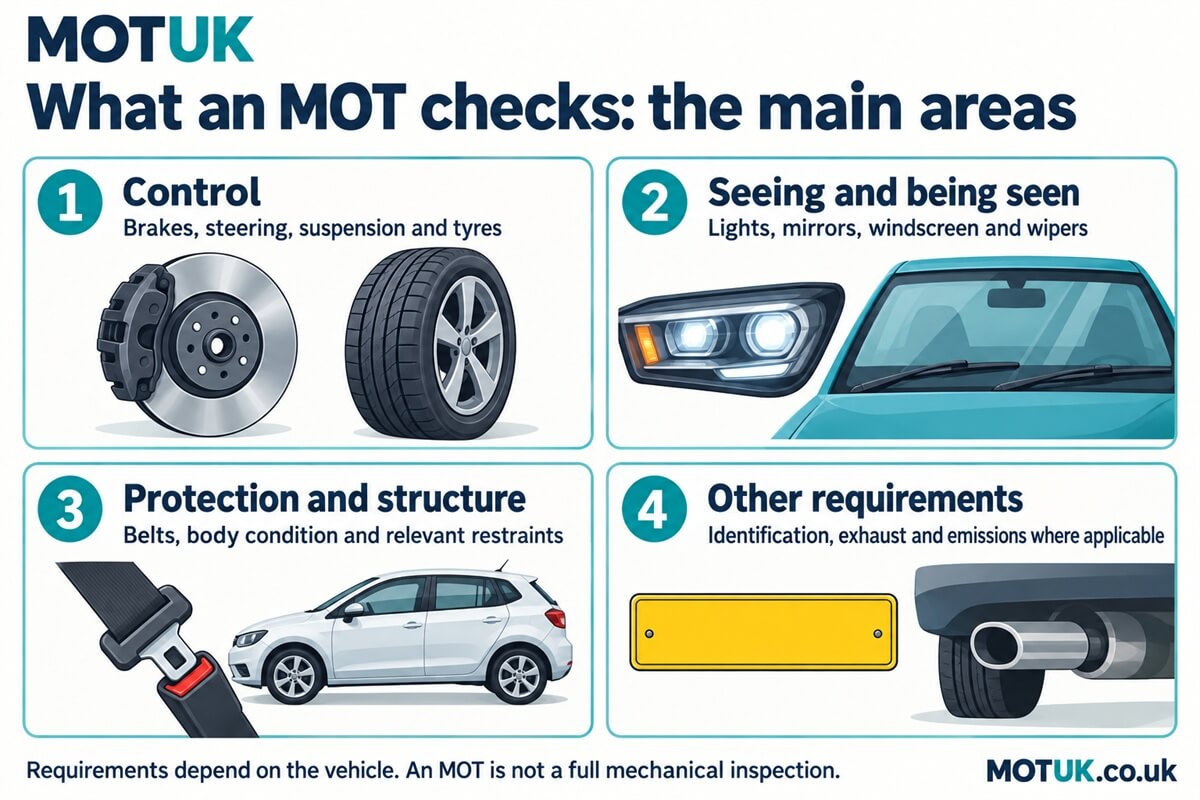
Main areas of the inspection
- Brakes: condition, operation and performance, including the parking brake and relevant warning systems.
- Steering and suspension: security, wear and condition of components that affect control of the vehicle.
- Wheels and tyres: suitability, condition, tread and relevant tyre-pressure monitoring equipment.
- Lights and electrical equipment: required lamps, reflectors, headlamp aim and relevant electrical items.
- Visibility: the windscreen, mirrors, wipers and washers, including obstructions affecting the driver’s view.
- Restraints: seat belts, their mountings and relevant airbag or restraint-system warning lamps.
- Body and structure: excessive corrosion or damage in important areas, along with doors, seats and specified attachments.
- Exhaust and fuel systems: security, leaks, noise and emissions where applicable.
- Identification and other equipment: number plates, vehicle identification and items such as the horn.
The precise requirements depend on the vehicle’s age, type and equipment. The inspection manual is the place to check a particular defect rather than relying on a general checklist.
What is not covered?
The MOT does not assess the general mechanical condition of the engine, clutch or gearbox. It does not replace scheduled servicing or establish a traction battery’s remaining capacity. A pass also does not confirm that a used car has no outstanding finance, previous accident damage or developing mechanical faults.
Understanding the result
Dangerous and major defects cause a failure. Minor defects can appear on a pass and still require attention. Advisories highlight matters to monitor or repair; they should inform your maintenance plan.
A dangerous defect means the vehicle must not be driven until it is repaired. Other failures also require you to consider roadworthiness and the validity of the previous certificate. Our failed MOT guide explains the next steps.
Prepare without buying unnecessary work
Use our 13 owner checks to find simple issues. Ask for an explanation and estimate before authorising repairs, and distinguish work needed to pass from maintenance recommended for later. Keep the result and receipts together.
Reviewed 10 October 2026. MOT guidance applies to England, Scotland and Wales unless stated otherwise.