
The best maintenance plan starts with the car’s history and its manufacturer’s schedule. A used car with unknown servicing needs a baseline inspection, not a collection of universal replacement intervals or fuel-saving tricks.
Start with the records
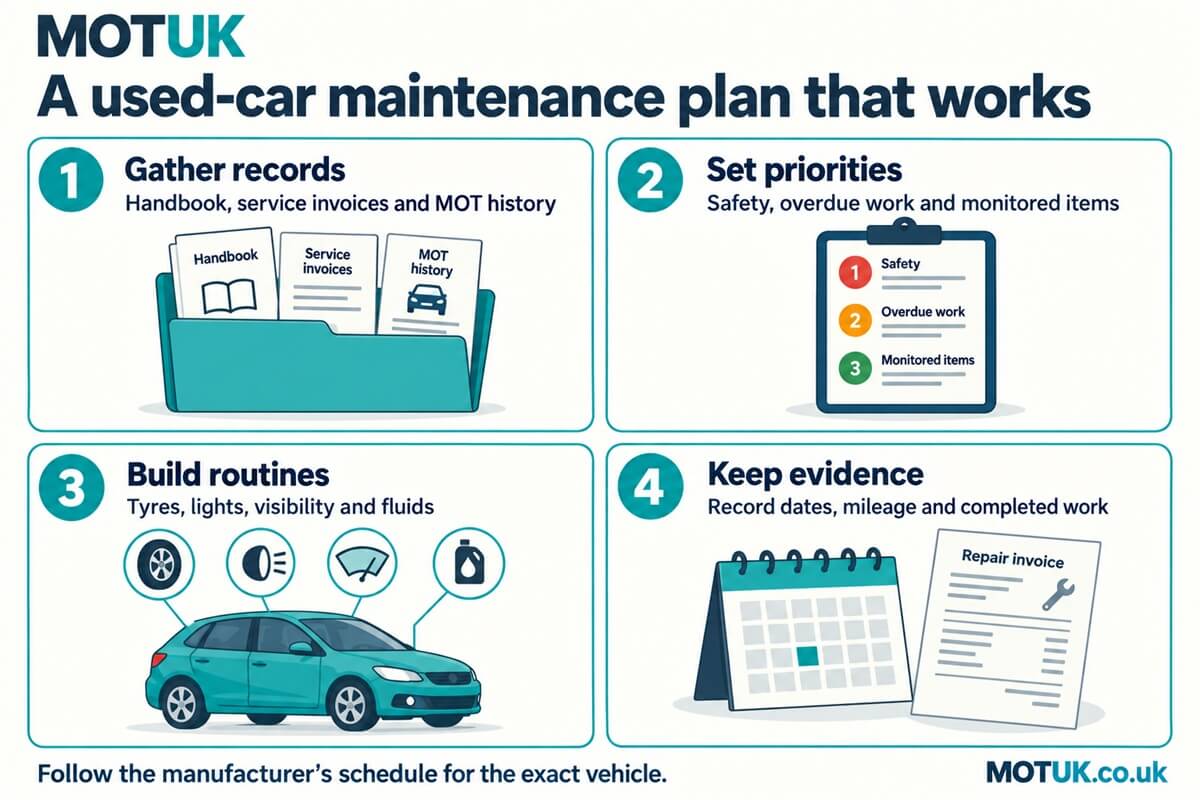
Collect service invoices, the handbook and the MOT history. Note recurring advisories, gaps in servicing and scheduled items without evidence of completion. An MOT record does not prove that oil, belts or other maintenance items were changed.
Ask a competent garage to prioritise immediate safety issues, overdue scheduled work and items that can be monitored. Keep a written plan with dates or mileage targets and estimates.
Make routine checks a habit
- Tyres: check cold pressures for the current load, tread and visible damage. Repeated pressure loss needs investigation.
- Lights and visibility: check lamps, clean glass and replace ineffective wiper blades. Use suitable screenwash.
- Fluids: follow the handbook’s method and specification. Check coolant only as instructed with the engine cool; never open a hot pressurised system.
- Warning signs: respond to warning lamps, unusual noises, leaks and changes in braking or steering.
Do not simply keep topping up a reservoir that loses fluid. Brake-fluid loss, overheating or oil-pressure warnings may require urgent professional attention. Follow the handbook and arrange recovery when the car cannot be driven safely.
Service for age as well as mileage
Use the correct oil specification and the replacement intervals for your exact engine and model. Some maintenance becomes due with time even when a car covers few miles. A dashboard reminder and an MOT expiry date track different things.
Avoid replacing parts solely because an online guide gives one interval for every vehicle. Ask the garage to explain its recommendation and record the work it completes.
Keep costs predictable
Set aside money for wear items and repairs as well as the annual test. Review advisories before the next MOT instead of treating them as optional forever. Compare itemised quotes for the same work and agree permission before additional repairs.
Use and store the car sensibly
Follow manufacturer advice for extended storage, battery care and infrequent use. Keep drains, lights and number plates clean, and investigate new water leaks. If the car has stood unused, use our return-to-driving checklist. Regular attention can help you spot problems earlier; it cannot guarantee a particular lifespan.
Reviewed 10 October 2026. MOT guidance applies to England, Scotland and Wales unless stated otherwise.