
Start with the failure report. It identifies the defects and their severity, which helps you decide whether the car must stay at the garage, how to organise repairs and when to book a retest.
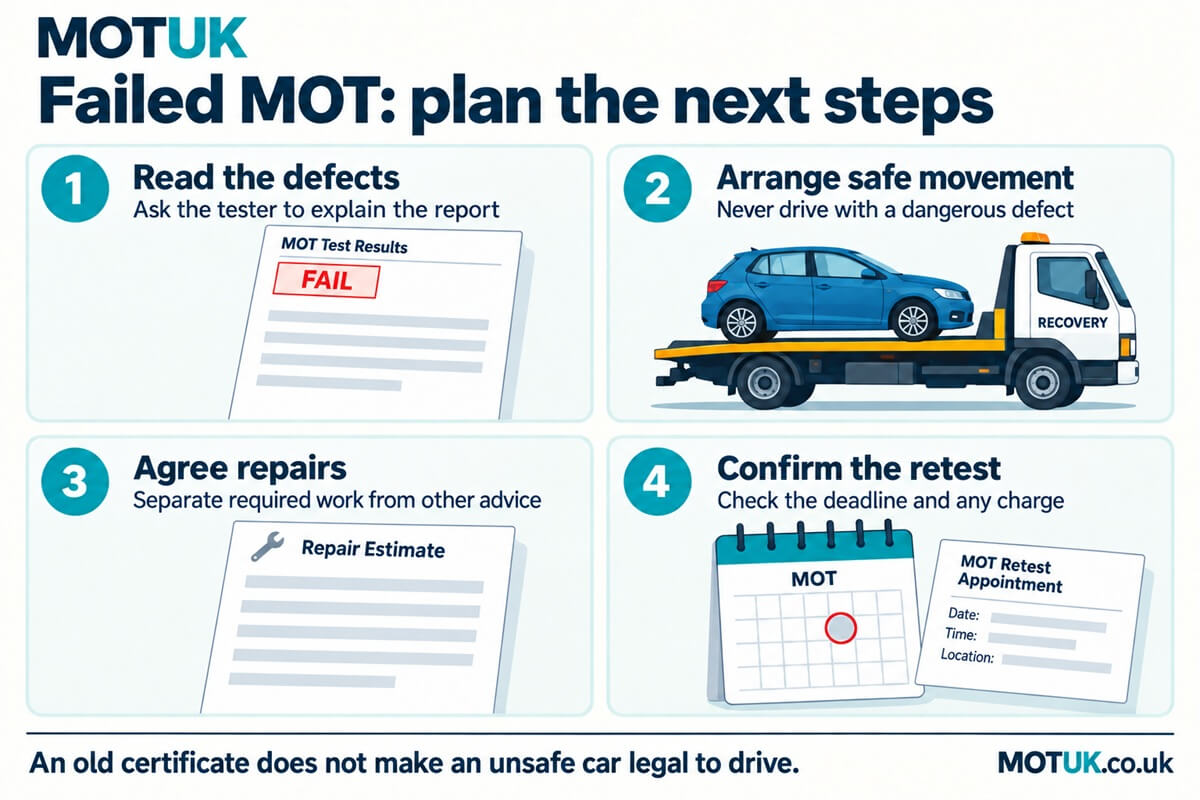
1. Understand the defects
A dangerous defect presents an immediate risk: do not drive the vehicle until it has been repaired. A major defect also causes a failure. Minor defects and advisories should be considered alongside the failed items when planning maintenance.
Ask the tester to explain unfamiliar wording. Request an itemised estimate that separates required repairs from optional or future work. You can choose another repairer, but moving the vehicle must be safe and lawful.
2. Decide how the car can be moved
You can take a failed vehicle away only if the current MOT is still valid, no dangerous defect is recorded and it meets the minimum standards of roadworthiness. An old certificate does not make an unsafe car legal.
If the MOT has expired, limited exceptions for test and repair journeys do not remove roadworthiness or insurance requirements. Where there is any doubt about safe movement, arrange recovery. Confirm the arrangements with the repairer before leaving the centre.
3. Understand partial retests
- If the vehicle stays at the test centre for repairs and is retested within 10 working days, the partial retest is free.
- If you take it away and return by the end of the next working day, a free retest applies only to the specific items listed in the official rules.
- If you return to the same centre within 10 working days after taking it away, a partial retest may be available and a fee may apply.
- Outside the qualifying arrangements, another full test and fee are normally required.
Confirm the deadline and charge with the centre. Do not assume a retest is always free or that “10 days” means 10 calendar days.
4. If you disagree with the result
Speak to the centre first. If you want DVSA to investigate a failed test, follow the MOT appeal procedure promptly and avoid repairs before the appeal inspection, as alterations can prevent a meaningful assessment.
5. After the pass
Check the recorded result and expiry date, keep invoices and plan work on advisories. Our pre-MOT checklist can help with future preparation, while regular servicing addresses maintenance beyond the MOT.
Reviewed 10 October 2026. MOT guidance applies to England, Scotland and Wales unless stated otherwise.