
MOT testing covers motorcycles, scooters and mopeds as well as cars. A rider needs the right test centre and a preparation routine suited to a bike: a car checklist will miss items such as the drive chain, controls and footrests.
This guide applies to England, Scotland and Wales. Use nidirect for Northern Ireland’s test ages and booking arrangements.
When is the first motorcycle MOT due?
Most motorcycles first need an MOT at three years old, then annually. Check the registration date and current record using the official MOT status service. Scooters and mopeds are included in the motorcycle testing scheme; being small or used only occasionally is not a general exemption.
Some historic vehicles qualify for exemption. Check the official exemption rules rather than relying on a seller’s description.
Class 1 or Class 2?
| Engine size | MOT class |
|---|---|
| Up to and including 200cc | Class 1 |
| Over 200cc | Class 2 |
The maximum test fee for a motorcycle without a sidecar is currently £29.65; with a sidecar it is £37.80. Confirm the price when booking. For an electric motorcycle, unusual conversion or three-wheeler, give the centre the exact vehicle details instead of guessing a class from this engine-size table. See our MOT fee guide.
What does the tester examine?
The motorcycle inspection manual covers identification, brakes, steering, lights, wheels, tyres, suspension, structure, controls, horn and exhaust noise. An MOT is a roadworthiness inspection, not an engine-health report or a replacement for servicing.
Chain condition and adjustment, throttle operation, footrests and the security of the seat are among the bike-specific concerns. A sidecar brings additional checks. Do not assume that a part is outside the test simply because it does not appear on a car checklist.
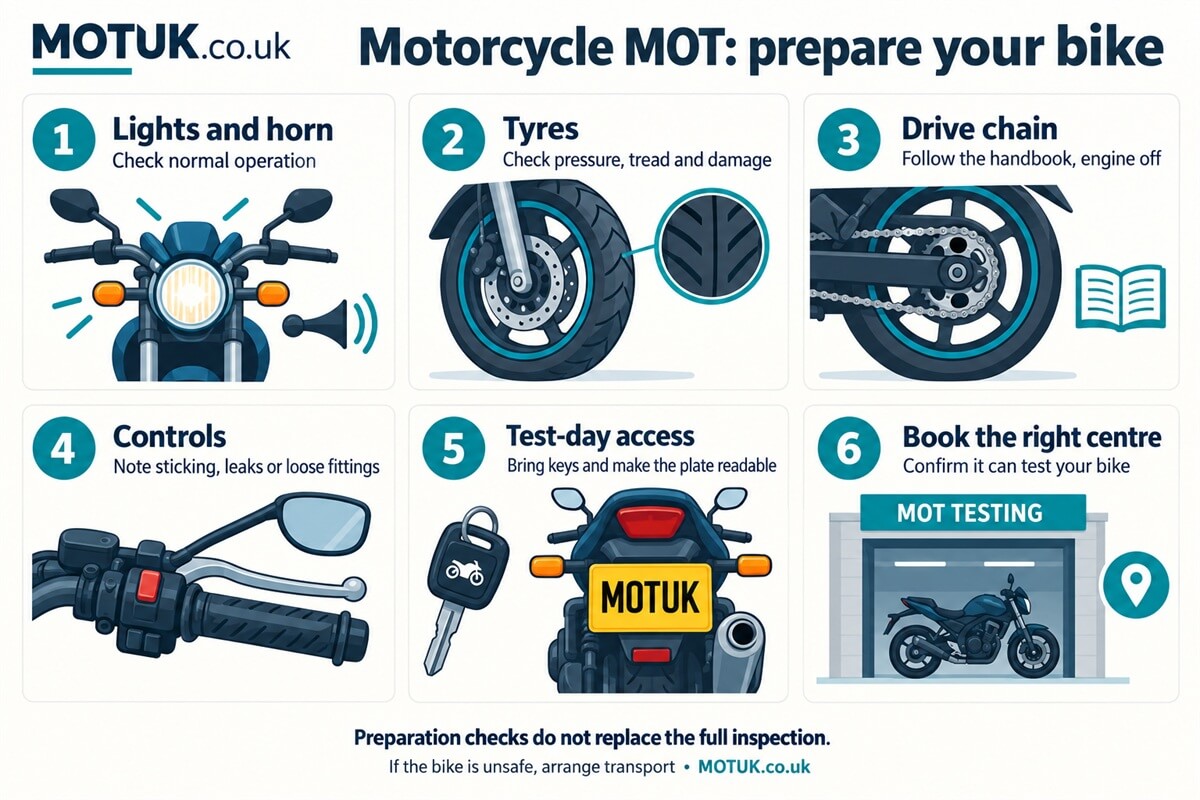
Prepare the bike safely
- Lights and horn: check normal operation using the handbook. Tell the centre about unusual lighting equipment or modifications.
- Tyres: inspect for visible damage, check pressures and review tread across the tyre. Motorcycle tread rules differ from car rules; use the motorcycle tyre criteria for your vehicle.
- Drive chain: if fitted, check it using the manufacturer’s procedure and adjustment specification. Keep the engine off and hands clear of sprockets.
- Controls and attachments: note sticking controls, loose fittings, leaks or anything that has changed since the last ride.
- Access: bring the necessary keys, make the registration plate readable and ask whether luggage should be removed.
Use a stable, suitable support and stay within your competence. If braking, steering or tyre damage makes the bike unsafe, arrange transport rather than riding it to find out whether it passes.
Choose a centre that tests motorcycles
Use the vehicle-class filters in our MOT centre finder, then call to confirm the centre can test your particular bike. Ask about sidecars, electric models or modifications before reserving an appointment. The finder does not show live availability or prices.
Allow time for a repair and retest rather than booking at the last possible moment. Mention any known faults when handing over the bike so the tester has useful context.
Read the result before riding away
Check each recorded item, including advisories, and ask what needs attention. Keep repair records alongside the test history. For the conditions after a failure, read our repair and retest guide and the official result guidance; a dangerous defect must be repaired before riding.
Useful next steps
Use the MOT class finder and centre directory to find a station that tests motorcycles.
Sources and review
Reviewed 25 November 2026 using the DVSA motorcycle manual, its structure and controls section, and the official test-class and fee table.